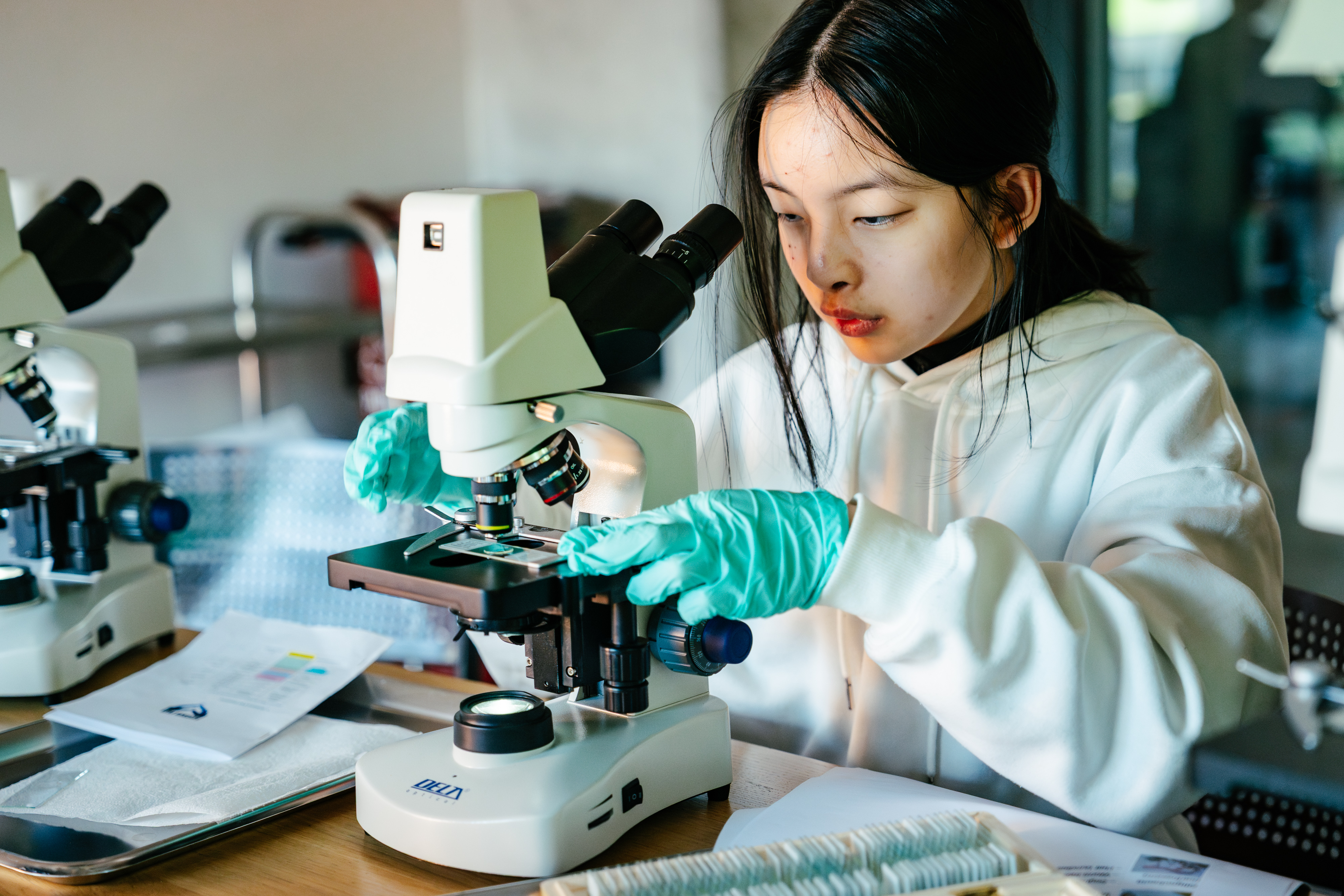
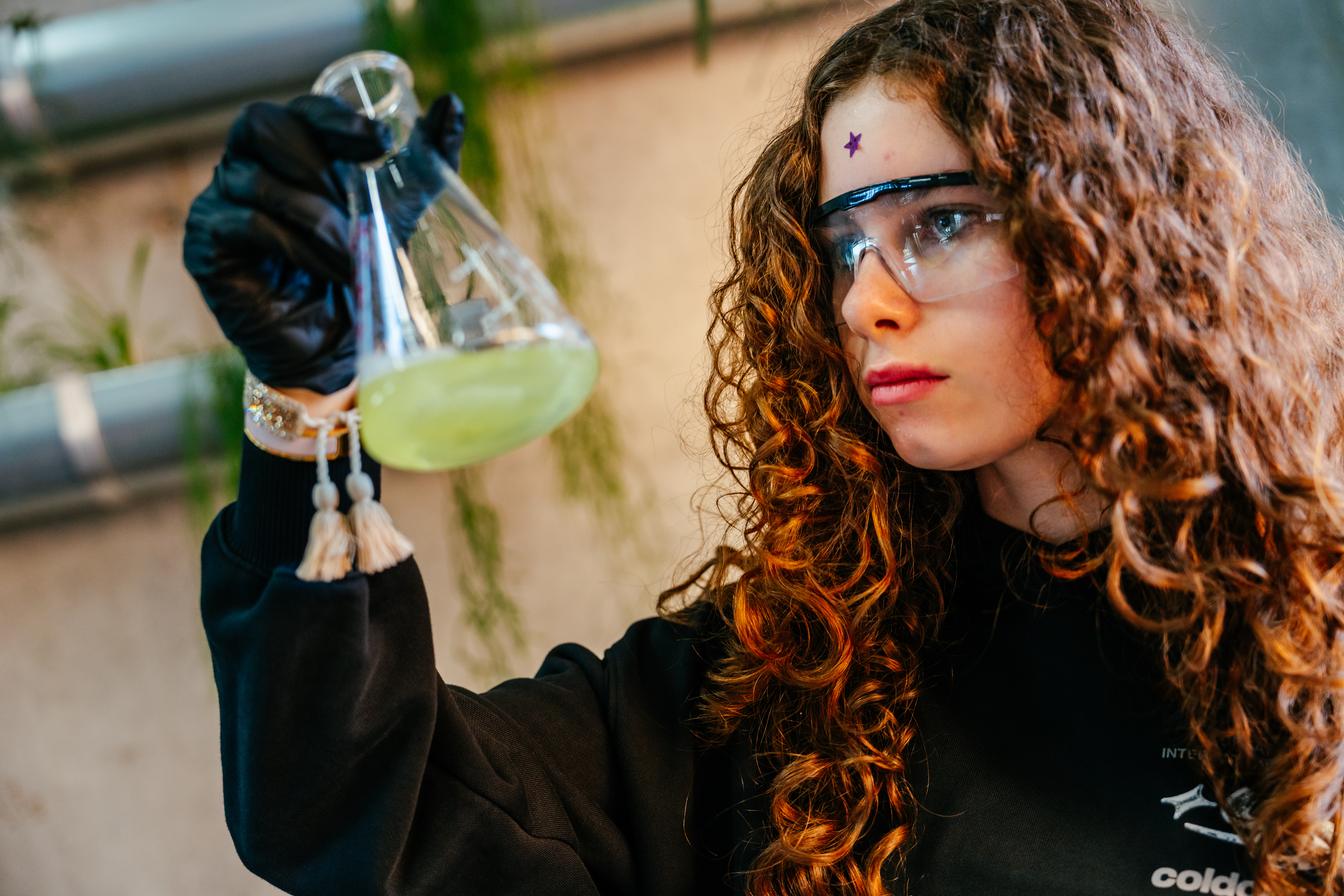
The Department of Natural Sciences teaches the fundamentals of three disciplines: Physics, Chemistry, and Biology. In reality, all of these subjects are intimately intertwined, and our teaching reflects this. Each subject borrows from the other ones and, thanks to this unique interdisciplinary approach, our students are able to appreciate more deeply the intricacies and complexities of natural phenomena.
Developing Young Scientists
Science at our school extends far beyond the classroom. Through practical investigations, research projects, scientific communication, and collaborative learning experiences, students develop the skills and mindset of real scientists.
Our students are encouraged to ask questions, investigate evidence, think critically, and communicate scientific ideas with confidence.
A key culmination of this journey is our annual Science Fair, where students bring their ideas to life through original projects, research, and experimentation, showcasing their creativity, inquiry, and scientific understanding.
Eye-opening discussions, unforgettable practicals and exceptional teachers – those are the things that make learning the Natural Sciences at Akademeia one of the best experiences you could ever have. Studying these subjects offers a completely new outlook on the surrounding world and the skills to explore its complexity and beauty to its fullest. All those aspects definitively make the department worth discovering, if not pursuing, by all new students.
Paulina, Student
Our students and teachers have three well-equipped lab rooms at their disposal. During Physics, Chemistry, and Biology laboratory sessions, not only do students perform experiments, but also they learn how to interpret and present data. Experiments conducted during Biology lab classes include, for instance, using oxygen sensors and data logging system to observe aerobic respiration or testing the impact of various factors on permeability of membranes including the use of colorimetric devices.
Dr Jakub Mikoszewski, Head of Natural Sciences Department
Subject Syllabuses
SYLLABUS STRUCTURE
IGCSE (YEARS 10 & 11)
Section 1 – The Nature and Variety of Living Organisms Section 2 – Structures and Functions in Living Organisms Section 3 – Reproduction and Inheritance Section 4 – Ecology and the Environment Section 5 – Use of Biological Resources
PRE-A (YEAR 11)
Topic 1: Cells and microscopy Topic 2: Mathematics in Biology Topic 3: Transport in cells Topic 4: Basic biochemistry and enzymes Topic 5: Photosynthesis and cell respiration Topic 6: Experiment design Topic 7: Human and plant transport Topic 8: Human excretion Topic 9: Neurobiology and senses Topic 10: Endocrine and reproductive systems Topic 11: Genetics, inheritance and natural selection Topic 12: Ecology
A LEVEL (YEARS 12 & 13)
Unit 1 – Molecules, Diet, Transport and Health Topic 1 – Molecules, Transport and Health Topic 2 – Membranes, Proteins, DNA and Gene Expression Unit 2 – Cells, Development, Biodiversity and Conservation Topic 3 – Cell Structure, Reporoduction and Development Topic 4 – Plant Structure and Function, Biodiversity and Conservation Unit 3 – Practical Skills in Biology I Unit 4 – Energy, Environment, Microbiology and Immunity Topic 5 – Energy Flow, Ecosystems and the Environment Topic 6 – Microbiology, Immunity and Forensics Unit 5 – Respiration, Internal Environment, Coordination and Gene Technology Topic 7 – Respiration, Muscles and the Internal Environment Topic 8 – Coordination, Response and Gene Technology Unit 6 – Practical Skills in Biology II
Extra-curricular activities offered
Medicine Club
Biochemistry Elective
Biology Olympiad Elective
If you are curious about the universe, that’s definitely a place for you. Personally, I feel that Natural Sciences A Level courses would be challenging without expanding your knowledge beyond the concepts covered in the classes. This pushed us to reach for books, textbooks and peer-reviewed articles, which enabled us to expand our interests.
Robert, Year 12 student
SYLLABUS
IGCSE (YEAR 10)
Unit 1 – Forces and Motion Unit 2 – Electricity Unit 3 – Waves
IGCSE (YEAR 11)
Unit 4 – Energy resources and transfers Unit 5 – Solid, liquids and gases Unit 6 – Magnetism and Electromagnetism Unit 7 – Radioactivity and particles Unit 8 – Astrophysics
PRE A (YEAR 11)
Unit 1: Forces and Motion Unit 2: Electricity Unit 3: Waves Unit 4: Energy resources and energy transfers Unit 5: Solids, liquids and gases Unit 6: Magnetism and Electromagnetism
A LEVEL (YEAR 12)
Topic 1 – Mechanics Topic 2 – Materials Topic 3 – Waves and particle nature of light Topic 4 – Electric circuits
A LEVEL (YEAR 13)
Topic 5 – Further Mechanics Topic 6 – Electric and Magnetic fields Topic 7 – Nuclear and Particle Physics Topic 8 – Thermodynamics Topic 9 – Nuclear Decay Topic 10 – Oscillations Topic 11 – Astrophysics and Cosmology
Extra-curricular activities offered
Theoretical Physics Club
Experimental Physics Club
One of the most remarkable things about studying Natural Sciences at Akademeia is the people. You can immediately see just how passionate and immersed in the subjects they are – both students and teachers.
In today’s world, this department seems like an obvious choice, providing by far the broadest spectrum of specialities and career paths. The knowledge and skills offered will help fight future pandemics, combat global warming, cure genetic diseases or, who knows, maybe even assist in setting up a self-sustaining human colony on Mars.
Aleksandra, Year 10 student
Studying Physics is a journey through space, time, and curiosity, that same contagious curiosity that pervades children when they admire the marvels of the world where we live. Studying Physics is in fact rediscovering that genuine spirit of enquiry that comes naturally to children. In other words, taking this journey means staying young forever.
Unit 1 - Foundations of chemistry Unit 2 - Quantitative chemistry Unit 3 - Bonding and Structure Unit 4 - Physical chemistry Unit 5 - Inorganic chemistry Unit 6 - Organic chemistry
A LEVEL (YEARS 12 & 13)
Unit 1: Structure, Bonding and Introduction to Organic Chemistry Topic 1: Formulae, Equations and Amount of Substance Topic 2: Atomic Structure and the Periodic Table Topic 3: Bonding and Structure Topic 4: Introductory Organic Chemistry and Alkanes Topic 5: Alkenes
Unit 2: Energetics, Group Chemistry, Halogenoalkanes and Alcohol Topic 6: Energetics Topic 7: Intermolecular Forces Topic 8: Redox Chemistry and Groups 1, 2 and 7 Topic 9: Introduction to Kinetics and Equilibria Topic 10: Organic Chemistry: Halogenoalkanes, Alcohols and Spectra
Unit 3: Practical Skills in Chemistry I
Unit 4: Rates, Equilibria and Further Organic Chemistry Topic 11: Kinetics Topic 12: Entropy and Energetics Topic 13: Chemical Equilibria Topic 14: Acid-base Equilibria Topic 15: Organic Chemistry: Carbonyls, Carboxylic Acids and Chirality
Unit 5: Transition Metals and Organic Nitrogen Chemistry Topic 16: Redox Equilibria Topic 17: Transition Metals and their Chemistry Topic 18: Organic Chemistry – Arenes Topic 19: Organic Nitrogen Compounds: Amines, Amides, Amino Acids and Proteins Topic 20: Organic Synthesis
Unit 6: Practical Skills in Chemistry II
*The chemistry Pre-A course provides a comprehensive introduction to the fundamental principles of general (exploring atomic structure and the periodic table, operating quantitative chemistry and developing understanding of chemical bonding and structure), inorganic (mastering titration technique, analysing trends and chemical reactions), physical (understanding of reaction kinetics and energy changes) and organic chemistry. It is a space where the students develop chemistry related knowledge and scientific vocabulary. The course expands understanding of a range of concepts and principles which facilitate the entrance to Chemistry A Level programme.
Through regular hands-on experiments, individual approach, engaging discussions and teamwork, the students develop problem-solving skills, practical competency, and conceptual understanding. The course not only prepares the students for further study but also nurtures curiosity and enthusiasm for chemistry and the sciences.
Extra-curricular activities offered
UK Chemistry Olympiad Elective
Science-based clubs: Chemical influencers, Pollution detectives
Chemistry
Student Research Projects
As part of their coursework, Year 9 students undertake scientific communication projects that challenge them to explore scientific topics in greater depth while developing research, writing, and presentation skills.
Students learn how to:
• Research scientific literature and sources • Evaluate information critically • Communicate complex ideas clearly • Present findings to a wider audience
These projects contribute to the development of skills that are essential for future scientific study and research.
Year 10 students design and carry out their own experimental investigations, applying their understanding of scientific methodology to real research questions.
Through this process, students gain experience in:
• Experimental design • Data collection and analysis • Evaluation of evidence • Scientific report writing • Presentation and communication of results
Outstanding investigations are showcased during the annual Science Fair, where students have the opportunity to present their work and receive recognition for their achievements.
University Preparation Through Independent Research
In Year 12, students undertake independently designed experimental projects that closely mirror the expectations of university-level scientific study.
Students identify their own research questions, design methodologies, collect and analyse data, and evaluate their findings with increasing independence.
These experiences provide valuable preparation for:
University applications
Personal statements
Admissions interviews
Future undergraduate research
Many students achieve Distinction-level outcomes in these projects, demonstrating advanced scientific skills that are highly regarded by universities and admissions tutors.
Beyond academic achievement, these projects foster curiosity, resilience, independence, and intellectual confidence.
University Offers (Science Fields)
University of Oxford, Biochemistry
University of Oxford, Biological Sciences
University College London (UCL), Biochemistry
University College London (UCL), Natural Sciences
University College London, Psychology
University College London, Astrophysics
Durham University, Natural Sciences
Imperial College London, Biotechnology
Imperial College London, Biological Sciences
Imperial College London, Biochemistry
Imperial College London, Physics with Theoretical Physics